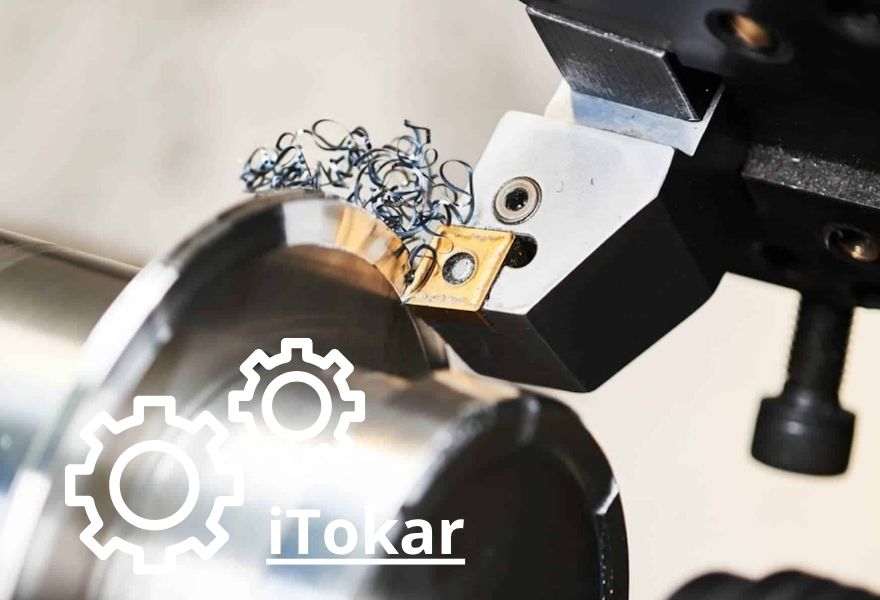
Restoration of Bearing Seats: Repair of Shafts and Housings
We perform restoration of bearing seats on shafts and in housings of industrial equipment and various mechanisms. If a bearing begins to spin due to wear, develops play, or causes rotational inaccuracies, simply replacing the bearing itself does not always solve the problem. In some cases, it is necessary to restore the bearing seat and repair the metal part.
We offer turning services and machining of parts to restore working surfaces. The technology is selected based on the degree of wear, the part's material, the required dimensions, and the conditions of subsequent operation.
Why Bearing Seats Wear Out
A bearing assembly is designed for a precise fit between its components. However, during operation, the equipment is subjected to constant loads. As a result, the seating surface may gradually deviate from its original parameters.
The main causes of wear are:
- prolonged operation;
- excessive loads;
- vibration;
- incorrect bearing installation;
- insufficient lubrication;
- overheating;
- rotation of the inner or outer ring.
As a result, the fit becomes too loose. The bearing is no longer secured as intended by the design and begins to shift or rotate relative to the surface.
If operation continues in this condition, wear typically increases. Therefore, timely restoration of the mounting surfaces helps prevent further damage to the part and reduces the cost of repairing the assembly.
Restoring the Shaft Mounting
The shaft mounting surface is most often used to install the inner bearing ring. Under normal operating conditions, the connection must ensure the necessary fixation of the part.
If the shaft surface is worn, the following may appear:
- gouges;
- scratches;
- traces of bearing slippage;
- reduction in diameter;
- surface irregularities.
In such a situation, a new bearing installed on a worn shaft may not always function properly.
Restoring the shaft fit begins with an assessment of the part's condition. Depending on the extent of the damage, machining, surface restoration followed by machining to the required dimensions, or the fabrication of an additional component may be necessary.
After restoration, it is important to ensure the correct geometry of the mounting surface. The diameter, concentricity, and quality of machining are of particular importance.
Restoring the fit in the housing
A similar problem arises with housings in which bearings are installed. As the bearing bore wears, the outer ring of the bearing may begin to shift or rotate.
This results in:
- an increased bore diameter;
- grooving;
- ovality;
- surface damage.
Simply replacing the bearing in this case often proves to be a temporary solution. If the cause of the malfunction lies specifically in the housing, the new bearing will also operate with a misaligned seating surface.
Restoring the seating surface in the housing requires precise machining of the bore. Depending on the part's design, this may involve boring, installing a repair sleeve, or another technical solution.
The main objective is to restore the seating area to its required dimensions and geometry so that the bearing assembly operates reliably again after repair.
How to Choose a Repair Method
There is no universal repair method for all parts. The technology depends on the nature of the damage and the requirements for the assembly.
Before starting work, it is necessary to determine:
- initial fit dimensions;
- actual degree of wear;
- shaft or housing material;
- nature of the load;
- operating conditions;
- accuracy requirements.
In some cases, it is sufficient to remove a minimal layer of metal and restore the surface geometry. In cases of significant wear, it may be necessary to first build up the working area, followed by machining.
When restoring bearing seats, it is particularly important not to rely solely on visual inspection. A surface that appears relatively normal may have deviations in diameter or geometry that are critical for continued operation.
Why Precision Is Critical
A bearing assembly functions as a single system. Therefore, the quality of the repair is determined not only by how well an individual surface is restored, but also by how precisely it is positioned relative to other components.
During restoration, the following must be checked:
- diameter;
- roundness;
- alignment;
- surface quality;
- fit.
If the restoration of the mating surfaces is performed incorrectly, excessive vibration, overheating, or accelerated bearing wear may occur after assembly.
That is why it is best to entrust the repair of shafts and housings to specialists who have the appropriate equipment and experience working with metal parts.
Repair or manufacture a new part?
The decision depends on the condition of the original part. Sometimes repair proves to be the most cost-effective option, especially when dealing with a large shaft, a complex housing, or an expensive piece of equipment.
In other cases, it makes more sense to manufacture a new part. This approach can be used if the damage is too severe or if restoration would require a large number of operations.
Therefore, it is advisable to evaluate both options before starting repairs. For the customer, this allows them to choose a solution that takes into account cost, turnaround time, and the part's remaining service life.
Custom restoration of bearing seats
Wear on bearing seats is a common problem during the repair of industrial equipment, machinery, and various mechanisms. If addressed in a timely manner, in many cases it is possible to restore the working surface and return the parts to their required performance characteristics without completely replacing an expensive assembly.
Our team performs shaft repairs, restoration of fits on shafts and in housings, as well as other types of machining for metal parts. State-of-the-art equipment and the expertise of our specialists allow us to perform work with the necessary precision and control the key parameters of the restored surface.
If you need to restore bearing seats or repair a worn metal part, our specialists will help you determine the appropriate machining option, taking into account the product's design, the degree of wear, and future operating conditions.
Order Manufacturing
If you need a new custom part manufactured rather than a repair, you can order its production based on a drawing or sample. To get a preliminary idea of service rates, visit
Click - Submit a Request.
See - Prices for turning services.
 ADDRESS
 PHONE
PHONE Email
Email