Custom Axle and Pin Manufacturing in Ukraine
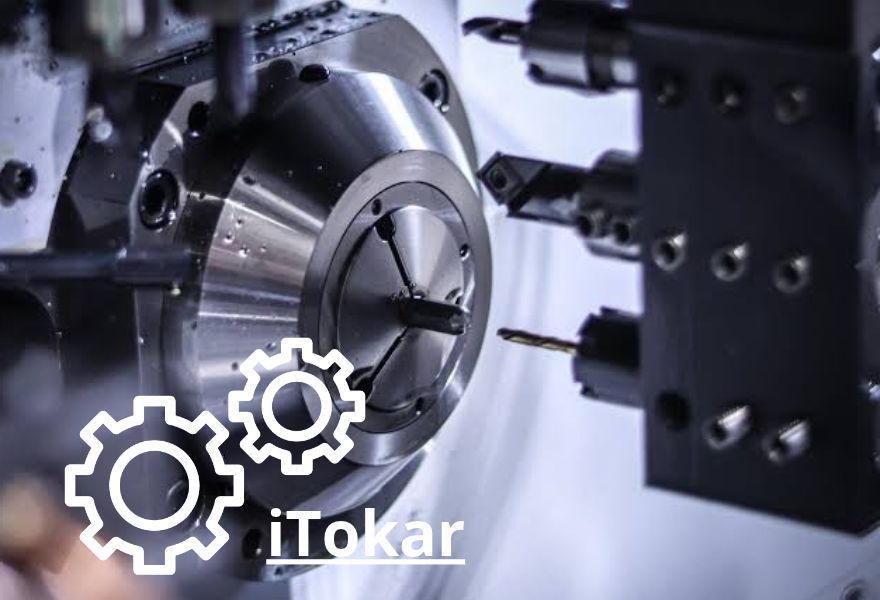
We manufacture custom axles and pins for industrial equipment, agricultural and construction machinery, and various mechanisms and repair jobs across Ukraine. We produce metal parts from drawings, sketches, dimensions, or samples. Depending on the design, this can include turning cylindrical surfaces, facing ends, cutting grooves, chamfering, and threading.
Where Axles and Pins Are Used
Axles and pins look like simple parts. But their dimensions and design are tied directly to how a specific mechanism works.
Axles carry rotating elements: rollers, wheels, levers, and similar parts. Pins are more common in hinged joints, locking mechanisms, and assemblies that need a movable or detachable connection.
Manufacturing precision determines whether there is excess play, whether mating elements sit correctly, and how long the whole assembly lasts.
That is why even a seemingly simple cylindrical part needs the working diameter, length, seating surfaces, and service conditions defined in advance.
Manufacturing Axles to a Drawing
A drawing shows the full design of the future part: several diameters, the length of individual sections, chamfers, grooves, threads, and tolerances.
When machining an axle, the most important thing is holding the alignment of its steps. If the working surfaces shift relative to each other, the mounted element will run out of true.
Depending on the design, lathe machining includes:
- turning outer diameters;
- facing ends;
- machining steps;
- cutting grooves;
- forming chamfers;
- cutting threads;
- finish machining of seating surfaces.
After the main operations, dimensions and compliance with technical requirements are checked.
Manufacturing Pins for Mechanisms
Pins work in joints under different kinds of load: shear, bending, friction, or several at once.
Machining a pin means holding the working diameter, length, fit type, and fastening method precisely. The design may include grooves for retaining rings, holes for a cotter pin, threaded sections, and other features.
A small deviation in diameter is enough to widen the clearance in a joint. That is why custom pin manufacturing deserves just as much attention to precision as far more complex parts.
Manufacturing from a Sample When There Is No Drawing
In practice, a customer often brings in a worn axle or pin with no factory drawing left. In that case, the part is manufactured from a sample.
But copying the old part's dimensions exactly will not work. If it has spent a long time in service, its working surfaces have almost certainly worn.
For instance, an old pin's diameter may have shrunk while the mating hole grew larger from wear. Reproduce a new part strictly to that worn sample, and the original clearance comes out wrong.
Therefore, when manufacturing parts without a drawing, it is important to consider not only the part itself but also the parameters of the mating assembly.
Choosing a Material for an Axle or Pin
Material choice depends on the load and service conditions. Structural steels are the most common choice: they offer enough strength and machine well on a lathe.
Material selection takes into account:
- the magnitude of the load;
- any impact loading;
- friction;
- rotation or motion speed;
- environmental conditions;
- wear-resistance requirements.
In some cases, extending the part's service life calls for additional heat treatment, chosen according to how the part will work and what mechanical properties it needs.
Manufacturing Precision and Seating Surfaces
For axles and pins, not every surface matters equally, only specific working sections do, and these determine the quality of the connection with other elements.
For a pin seated in a hole with a small clearance, holding the diameter of the working section matters most. For an axle carrying a bearing, an accurate seating surface is essential.
Dimensional control helps avoid assembly problems such as:
- excessive play;
- an overly tight fit;
- misalignment;
- accelerated wear;
- vibration during operation.
Before ordering, it helps to specify not just the part's overall size but the purpose of each working surface.
When a New Part Makes More Sense
If an axle or pin is worn, broken, or no longer available for purchase, manufacturing a new part is often more practical than a long search for the original spare.
This applies especially to:
- older machinery;
- non-standard mechanisms;
- imported equipment;
- one-off machines;
- equipment that has been discontinued.
Having a drawing speeds up production, but even without one it is possible to assess whether the part can be made from a sample or from measurements.
The result is a part built for a specific mechanism, not a generic equivalent that still needs fitting.
Order Custom Axle and Pin Manufacturing
Send a drawing, sketch, or sample of the part. Specify the material, dimensions, and the assembly the part will work in, and we will estimate the scope of work and lead time, whether for a single part or a small batch.
Machining accounts for more than just geometry: load, fit type, and alignment requirements all factor in. That is how the part ends up fitting into the assembly without rework or adjustment.
Order Manufacturing
Click - Submit a Request.
See - Prices for Turning Services.
 ADDRESS
 PHONE
PHONE Email
Email