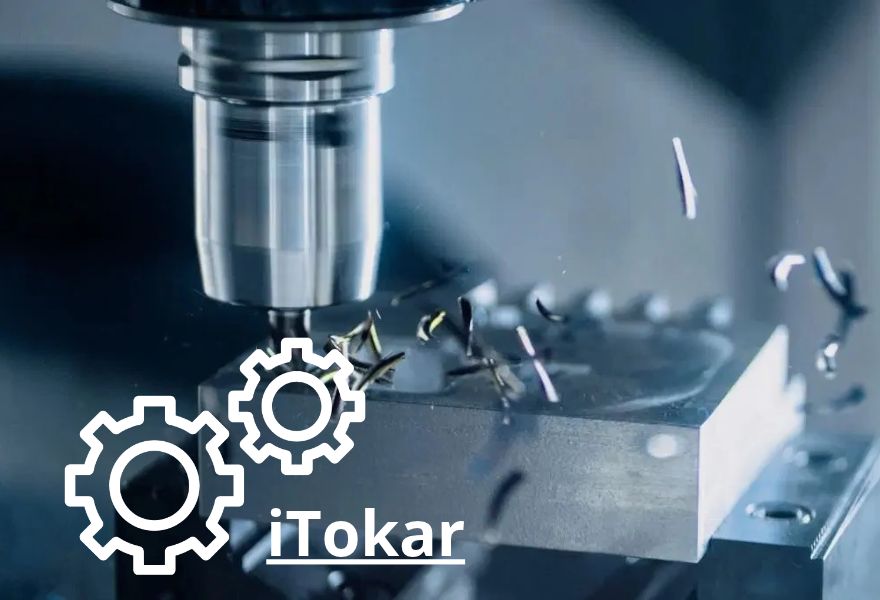
Custom Bushing Manufacturing in Ukraine
Custom bushing manufacturing is often the only practical option when a standard part does not match the required diameter, length, fit or material. This need comes up regularly during repairs of industrial equipment, agricultural machinery, machine tools and other mechanisms in Ukraine. Our workshop performs precision turning of bushings from metal blanks, working from technical drawings, sketches or sample parts, and takes on both single pieces and small batches where tight tolerances matter.
Why bushings are needed and when custom manufacturing makes sense
A bushing can serve several functions inside an assembly. It may act as a guide or support element, provide the correct fit between mating parts, or reduce wear on surfaces that move against each other. The bushing's design and material are chosen based on load, rotation speed, operating temperature and general service conditions.
Custom bushing manufacturing typically becomes necessary when:
- the right standard size simply isn't available;
- a non-standard inner or outer diameter is required;
- a precise fit has to be maintained;
- an off-the-shelf part doesn't match a specific assembly;
- a worn bushing needs to be replaced based on a sample;
- a small batch of identical parts is required.
Custom production is especially common during equipment repairs, where finding original replacement parts has become difficult or impossible.
Turning bushings on a lathe
Turning is the primary method used to produce metal bushings. The workpiece is mounted on the lathe, and material is removed from its surface in successive passes until the required dimensions are reached.
Depending on the design, this may involve:
- machining the outer diameter;
- boring the inner bore;
- facing the ends;
- forming chamfers;
- cutting grooves;
- cutting internal or external threads;
- machining special mating surfaces.
When producing a bushing, matching the stated diameters isn't the only concern. Concentricity, bore geometry, surface roughness and fit accuracy all matter just as much.
If a bushing is installed in a critical mechanism, insufficient precision can lead to play, increased friction or accelerated wear of the surrounding parts.
For related machining work, including shafts and bushings, see our page on machining and manufacturing shaft and bushing type parts.
Manufacturing metal bushings to size
The dimensions of a bushing depend on its purpose and the design of the assembly it belongs to. Usually an order needs to specify the outer diameter, inner diameter and length, but for precise manufacturing this information alone is often not enough.
Other factors that can matter include:
- tolerances;
- fit type;
- material;
- surface finish requirements;
- grooves, if any;
- chamfers;
- threading;
- installation specifics.
A technical drawing makes it much easier to define the exact parameters. In some cases, though, the customer only has an old, worn part on hand - manufacturing a bushing from a sample makes it possible to produce a replacement even without factory documentation.
Wear on the old part has to be taken into account: its inner diameter, for example, may differ from the original size after long service. That's why a new bushing should be based not only on the measurements of the worn sample, but also on the actual dimensions of the mounting location.
Bronze, brass and steel bushings
Material selection isn't about which metal is easiest to machine - it's driven by the actual operating conditions of the part.
Steel bushings offer high strength and are suitable for assemblies carrying significant mechanical loads. Different steel grades can be used depending on the specific requirements of the design.
Bronze bushings are common in mechanisms where good anti-friction properties and wear resistance matter. Bronze is frequently chosen for plain (sliding) bushings.
Brass bushings are also used across a range of mechanisms and structures where particular material properties and good machinability are required.
The choice of alloy depends on load, friction characteristics, the speed of the mating parts, and other operating factors. That's why it helps to mention where exactly the bushing will be used when placing an order.
Splined and other non-standard bushings
Not every bushing has a simple cylindrical shape. Depending on the design, a part may include grooves, steps, threads, special profiles or a splined connection.
Manufacturing splined bushings calls for particular attention to the dimensions of the mating surfaces - it's important to ensure the part matches the shaft correctly and transfers load the way it should.
A non-standard design doesn't mean a factory-made replacement part necessarily exists somewhere. Given a drawing or a good sample, a part can be manufactured to match the specific parameters of the mechanism.
How to prepare a bushing order
Before contacting a machine shop, it helps to gather as much information about the part as possible. The best option is a drawing that specifies dimensions, tolerances and material.
If there's no drawing, you can instead provide:
- a sample of the old bushing;
- outer and inner diameter measurements;
- the length;
- photos of the installation location;
- information about the mechanism;
- material requirements, if known.
For critical parts, it also helps to describe the load the bushing carries and the operating mode of the mechanism - this makes it easier to define the right requirements for the part and the machining process.
Custom bushing manufacturing for repair and production in Ukraine
Custom bushing manufacturing makes it possible to get a part that actually matches a specific mechanism, rather than adapting the design around whatever standard size happens to be available. This approach is particularly useful for equipment repairs, restoring older machinery, and producing non-standard assemblies.
We carry out precision turning of metal bushings based on drawings, dimensions and sample parts. Modern equipment allows us to maintain the required machining accuracy and consistent dimensions when producing several identical parts.
Our specialists' experience helps in selecting a practical machining approach based on the part's design and intended use - something that matters a great deal for bushings operating under constant friction and load. This approach results in a reliable part built for real operating conditions, not just one that matches formal dimensions on paper.
Order Manufacturing
Click - Submit a Request.
See - Prices for Turning Services.
 ADDRESS
 PHONE
PHONE Email
Email