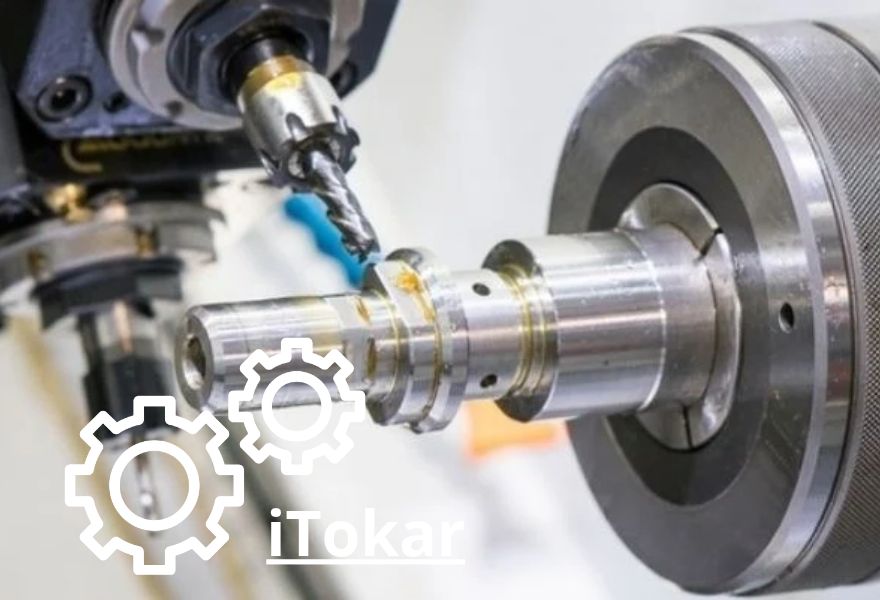
Custom Coupling Manufacturing in Ukraine: Metal Parts for Connecting Shafts
We manufacture custom couplings for industrial equipment, drives, and machine assemblies across Ukraine. We make metal parts from drawings, dimensions, or samples: a single coupling for a repair or a batch for a business.
Custom couplings are needed when an off-the-shelf part does not match the shaft diameters, length, fastening method, or seat shape. Adapting someone else's coupling to your mechanism usually takes longer and carries more risk than making the right one from the start.
What Shaft Couplings Are For
A coupling connects two shafts, for example an electric motor shaft and a pump shaft, and transmits rotation between them.
These parts are used in machine tools, pumps, production lines, gear drives, and auxiliary mechanisms. Designs vary widely. The simplest coupling is a steel sleeve bored for two shafts and held with set screws. More complex ones are stepped couplings with different bore diameters, keyways, threads, and bolted flanges.
Shaft coupling manufacturing starts with one question: what exactly does the part connect? Two couplings can look the same, yet one slides onto the shafts with clearance and is fixed with screws, while the other needs an interference fit and precisely bored holes.
The design is defined by:
- the diameters of the shafts being joined (they may differ);
- the coupling's length and outer diameter;
- the fastening method: key, set screws, pins, bolts;
- grooves, threads, additional holes;
- the load and operating mode of the mechanism;
- the required fit on the shaft.
The more precisely these parameters are known before work starts, the fewer problems at installation.
Manufacturing Metal Couplings to a Drawing
A drawing shows the part's geometry and the requirements for every surface. Based on it, we choose the blank, the order of operations, and what needs checking along the way.
Coupling machining covers the outer diameter, the ends, and the internal bores. Keyways, flats, and screw holes are made as separate operations.
The usual sequence:
1. Reviewing the drawing: dimensions, fits, design features.
2. Selecting a blank with machining allowance.
3. Turning the outer surfaces, ends, and bores.
4. Additional operations: keyways, threads, drilling.
5. Checking dimensions and concentricity.
A plain cylindrical coupling needs only a couple of operations. A stepped coupling with keyways and threads goes through every stage.
If couplings are needed for several identical mechanisms, a drawing lets us make the whole batch to one size. Each part fits in place without adjustment.
More on drawing-based orders in the article on turning to drawings.
Manufacturing a Coupling from a Sample Without Documentation
When repairing older equipment, there is often no drawing: the coupling was made years ago and the mechanism's documentation is lost. The starting point then becomes the part itself, its fragments, or the dimensions of the shafts it connects.
Making a coupling from a sample means paying attention to wear. The bores of an old coupling are usually worn, the edges are dented, and the keyway may have spread. Copy those dimensions, and the new coupling will wobble on the shaft just like the old one. So we work from the shaft diameters and the original geometry, not from the worn part.
For a quote, send us:
- the sample or photos of the part from several sides;
- the coupling's outer diameter and length;
- the bore sizes;
- details of keyways, threads, and fastening method;
- the diameters of the shafts being joined;
- the name of the equipment and its operating conditions.
If the sample is badly damaged, dimensions of neighboring parts in the assembly or any surviving drawings of the mechanism will help.
How we make parts without documentation is covered in the article on turning from samples.
## Material and Machining Precision for Couplings
The coupling material is chosen for the load, operating conditions, and how the part contacts the shafts. It is usually steel, but the choice depends on the task: strength, wear resistance, and machinability all count.
What matters most in a coupling is the bores and seating surfaces. A bore that is too large creates play, and the coupling starts to wear out the key. A bore that is too small will not let the coupling go on without excessive force. Misaligned bores offset the shafts from each other, and the bearings of both units run under extra load.
During machining we check:
- outer and inner diameters;
- the length and depth of individual sections;
- the concentricity of the bores with each other and with the outer surface;
- keyway and thread dimensions;
- the quality of seating surfaces.
Tight tolerances are not needed everywhere. We hold precisely what the assembly depends on: the seating bores and concentricity. Other surfaces are machined to normal precision so the part does not cost more than it should.
In design, a coupling is close to a bushing, so bushing and coupling manufacturing follow similar technology. More on bushings in the article on custom bushing manufacturing.
When to Order a Custom Coupling
A custom coupling makes sense when standard ones do not fit, a non-standard part needs replacing, or a mechanism has to be back in service quickly after a breakdown. It also suits businesses that need small batches for their own production.
For a quote, send a drawing, sample, or the main dimensions, along with the quantity, material (if known), and fit requirements. Any missing parameters we agree on while preparing the order.
Lead time and cost depend on design complexity, batch size, blank availability, and the number of operations. We can give exact figures once we see the drawing or sample.
Prices for standard work are on the shaft, bushing, and other parts manufacturing page. You can send details about your part through the iTokar website.
Order Manufacturing
Click - Submit a Request.
See - Prices for Turning Services.
 ADDRESS
 PHONE
 Email
