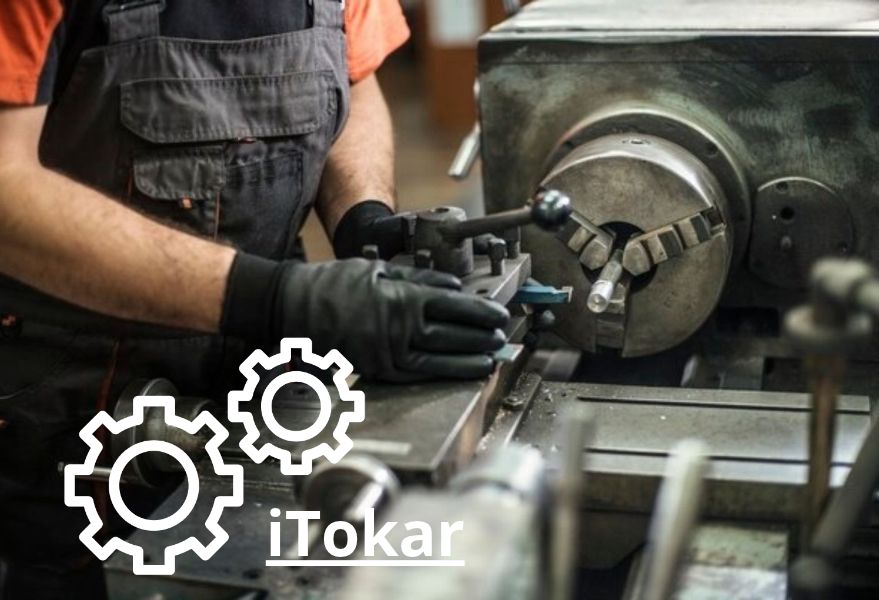
Custom Pulley Manufacturing in Ukraine: Machining to Drawings and Samples
We manufacture custom pulleys for machine tools, drive mechanisms, ventilation units, and industrial equipment across Ukraine. We make metal pulleys from drawings, dimensions, or samples: a single replacement for a broken part, spare parts for repairs, or a production batch.
Custom pulleys are usually needed in one of two cases. Either an off-the-shelf pulley does not match the diameter, number of grooves, or bore, or the right model was discontinued long ago. Then it is easier to make a part for the specific drive than to adapt a similar one.
Where Pulleys Work and Why Precision Matters
A pulley transmits rotation through a belt. Its diameter sets the drive ratio, and with it the speed of the driven shaft.
Machine tool pulleys are only one application. These parts are found in:
- metalworking and woodworking machines;
- fans and blowers;
- conveyors and production lines;
- pump and compressor drives;
- agricultural and other specialized machinery.
A pulley has a simple shape, but mistakes in it show up quickly. If the groove profile does not match the belt, the belt slips or sits too deep and wears against the bottom of the groove. A worn or inaccurate bore causes runout. A pulley with runout shakes the shaft, loads the bearings, and noticeably shortens belt life.
That is why manufacturing looks beyond outer dimensions: how the pulley mounts on the shaft, which belt runs on it, and at what speed.
Manufacturing a Pulley to a Drawing
If there is a drawing, the work starts there. From the documentation we define the diameters, width, groove profile and count, bore size, keyway, and threaded holes for set screws.
Pulley machining usually follows this order:
1. Selecting and cutting the blank.
2. Turning the outer diameter and facing the ends.
3. Boring the center hole to size.
4. Cutting grooves for the required belt type.
5. Additional features: keyway, hub, lightening holes, threads.
6. Checking dimensions and runout.
The grooves and the bore must be concentric. Otherwise, even a pulley with correct dimensions will run out on the shaft.
A drawing is especially useful when pulleys are needed regularly: one document lets you repeat the part order after order without re-measuring.
More on how we work with technical documentation in the article on turning to drawings.
Manufacturing a Pulley from a Sample When There Is No Drawing
Often the customer only has the old pulley, removed from the equipment after a breakdown. A new one can be made from that sample, but copying its dimensions one to one will not work.
Grooves wear over time: the belt grinds down the groove walls and the profile widens. The bore may be worn too. Reproduce that wear in a new part, and the belt sits wrong from day one. So when working from a sample, we restore the original geometry, not the part's current condition.
To prepare your order faster, send us:
- the pulley itself or photos from several sides;
- the outer diameter and width;
- the bore size and keyway;
- the belt type (the marking is usually printed on the belt) and the number of grooves;
- the name of the equipment the pulley comes from.
If a dimension cannot be determined from the worn part, we agree on it with you before starting. That way the new pulley fits in place rather than just looking like the old one.
How we make parts without documentation is described in the article on turning from samples.
Material, Precision, and Lead Time
The material is chosen for the load, speed, and operating conditions. Metal pulleys are made from steel and other metals suited to the specific drive. The part's purpose should decide the choice, not just the price of the blank.
When manufacturing metal pulleys, we check:
- the outer diameter and the groove diameter;
- the groove profile and pitch;
- the size and fit of the center bore;
- radial and axial runout;
- the quality of working surfaces.
For pulleys running at high speed, balancing matters separately. A slow-running ventilation pulley and a machine spindle pulley need different tolerances, so we agree on precision requirements before work begins. More on this in the article on tolerances and precision in lathe machining.
Lead time depends on part complexity, blank availability, and order volume. A single-groove pulley with a standard bore is quicker to make than a multi-groove pulley with a hub and keyway.
How to Order a Drive Pulley
For a quote, send a drawing or sample and tell us the quantity and the equipment the pulley will run in. If there is no drawing, the main dimensions and photos are enough. For batches, we agree in advance on the requirements every part must meet.
Besides pulleys, we make other drive parts: shafts, bushings, and [drive sprockets](https://tokarnie-raboty.com.ua/en/stati/privodnye-zvezdochki-na-zakaz-kiev). Prices for standard work are on the shaft, bushing, and other parts manufacturing page.
To discuss your order, contact us through the iTokar metal turning services website. We will review the drawing or sample, advise on the material, and give you a lead time.
Order Manufacturing
Click - Submit a Request.
See - Prices for Turning Services.
 ADDRESS
 PHONE
 Email
